Current Research & Main Projects
In-depth scientific programs conducted at the Institute for Predictive Performance Methodologies (IPPM) at UTARI, focusing on multiscale-multiphysics moisture degradation, machine learning prognostics, and specialized in-situ characterization rigs.
Multimodal Prediction Framework for Moisture Aging Assessment in Polymer Matrix Composites
Investigating non-Fickian diffusion, dielectric permittivity evolution, and Physics-Informed Neural Networks (PINNs) in glass fiber–reinforced polymer (GFRP) composites.
-
•
Composites Science and Technology (2025) IF: 9.9: "Multiscale-Multiphysics Modeling of Moisture Absorption-induced Dielectric Evolution in Polymeric Composites" • doi:10.1016/j.compscitech.2025.111433
-
•
Composites Part C: Open Access (2022) IF: 7.0: "Dielectric State Variables as Qualitative Indicators of Moisture Absorption-caused Mechanical Property Degradation in GFRP Composite Structures" • doi:10.1016/j.jcomc.2022.100259
Polymer matrix composites (PMCs) offer superior strength-to-weight ratios but remain vulnerable to environmental degradation, particularly moisture absorption. Absorbed water alters polymer chain chemistry through plasticization, swelling, and hydrogen bonding with hydrophilic sites, precipitating dramatic drops in tensile strength, flexural rigidity, and interfacial shear strength.
In this doctoral research, we established Broadband Dielectric Spectroscopy (BbDS) as a sensitive, non-destructive tool for evaluating moisture-induced material state changes. By measuring real-time complex permittivity and dipole relaxation strength across a broad frequency spectrum, we discovered a direct, quantifiable correlation with moisture uptake: a ~2.5 wt% moisture uptake induces a ~75% increase in dielectric permittivity.
To decipher the underlying physics, a multiscale-multiphysics finite element framework was constructed. At the microscale, non-Fickian Hindered Diffusion Modeling (HDM) separates free water molecules diffusing through micro-voids from bound water molecules immobilized at polar resin sites. Homogenization of microscale constituent properties into macroscale representative volumetric elements (RVEs) was coupled with Maxwell’s equations of electromagnetism.
Finally, we pioneered a Physics-Informed Neural Network (PINN) to solve the coupled HDM-Maxwell governing partial differential equations without requiring dense historical meshes. Utilizing modified Fourier architectures, signed-distance spatial weighting, and adaptive residual balancing, the PINN achieved over six orders of magnitude loss reduction, providing a scalable foundation for digital twins in composite structural health monitoring.
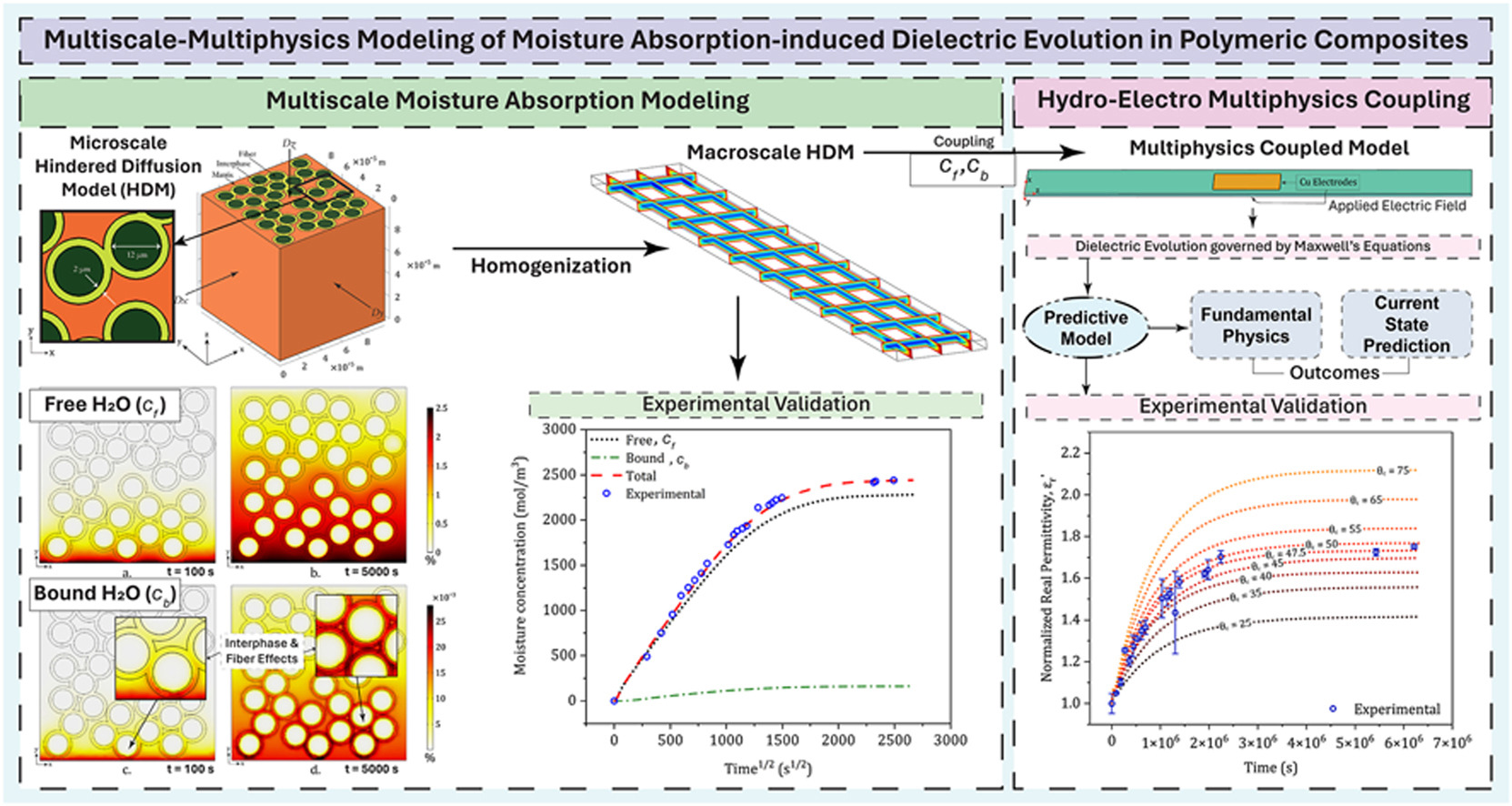
Official Graphical Abstract and Multiscale Framework from Composites Science and Technology (2025).
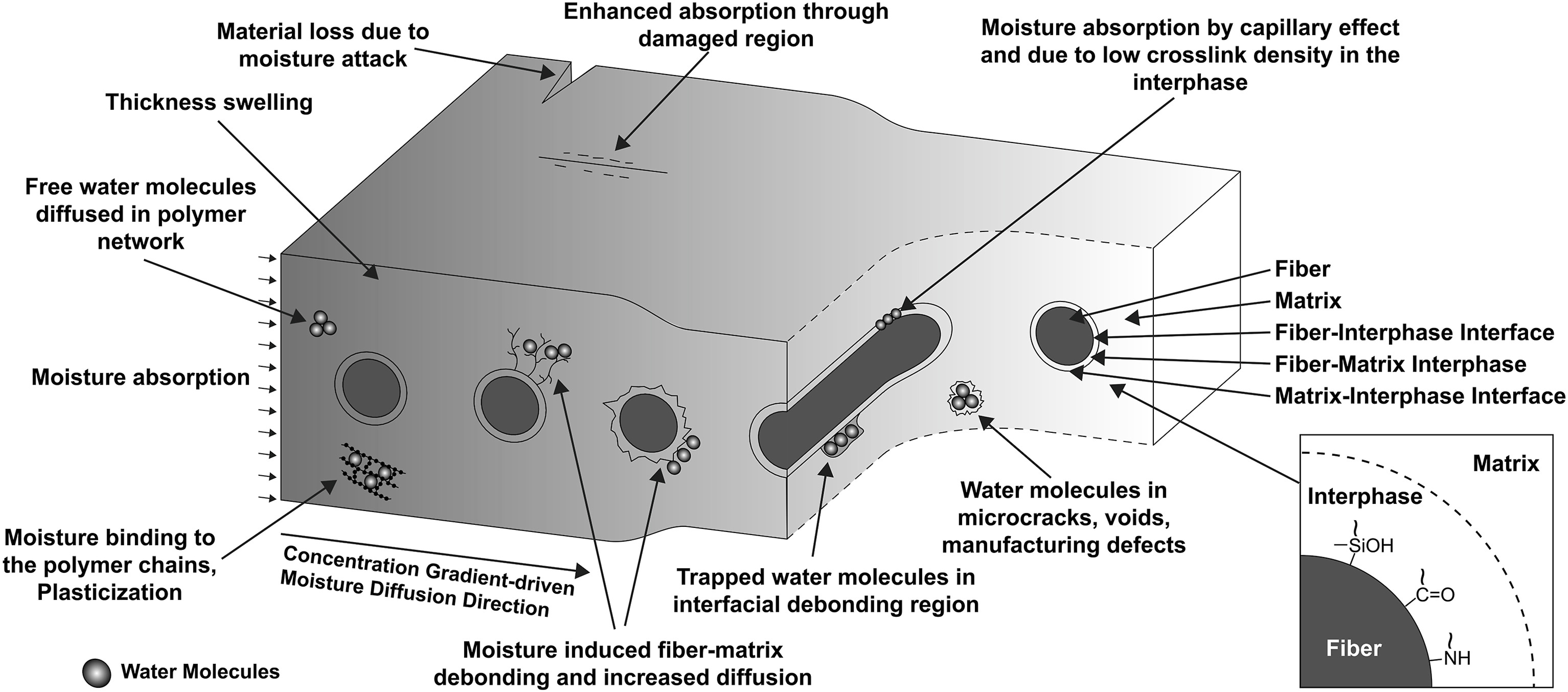
Distinguishes free and bound water diffusion kinetics with interphase fiber-matrix heterogeneity.
Directly couples moisture concentration fields with dipole reorientation and dielectric evolution.
SciML framework solving coupled multiphysics PDEs with >10⁶ loss reduction for real-time monitoring.
AI-Assisted Prognostic Health Monitoring of Polymer Composites
Repetitive cyclic loading induces progressive micro-damage accumulation in composite structures, ultimately leading to sudden, catastrophic failure if precursors are not detected in time.
This research presents an artificial neural network (ANN) framework for FRP composites under dynamic fatigue loading, which incorporates in-situ acquired dielectric state variables to predict remaining useful life (RUL) and residual strength (damage tolerance).
Key Scientific Innovations:
- Zero Historical Data Dependency: Employs unsupervised machine learning (uML) and supervised neural networks that eliminate the need for historical run-to-failure fatigue records.
- In-Situ Dielectric Tracking: Measures high-frequency impedance and dielectric permittivity evolution during live cyclic fatigue.
- Damage Phase Identification: Accurately isolates microcrack initiation, multi-damage interaction, and final delamination regimes prior to critical failure.
Video Presentation: AI-Assisted Life & Remaining Strength Prediction
In-Situ Optical & Microtensile Characterization Tools Development
Traditional global mechanical testing measurements (crosshead displacement, contact extensometers) often obscure localized strain concentrations and microcrack nucleation sites. Our laboratory prioritizes advanced optical Digital Image Correlation (DIC) and specialized microtensile test rigs for sub-pixel local strain mapping.
Real-Time Strain Field Measurement Using 2D DIC (RealPi2dDIC)
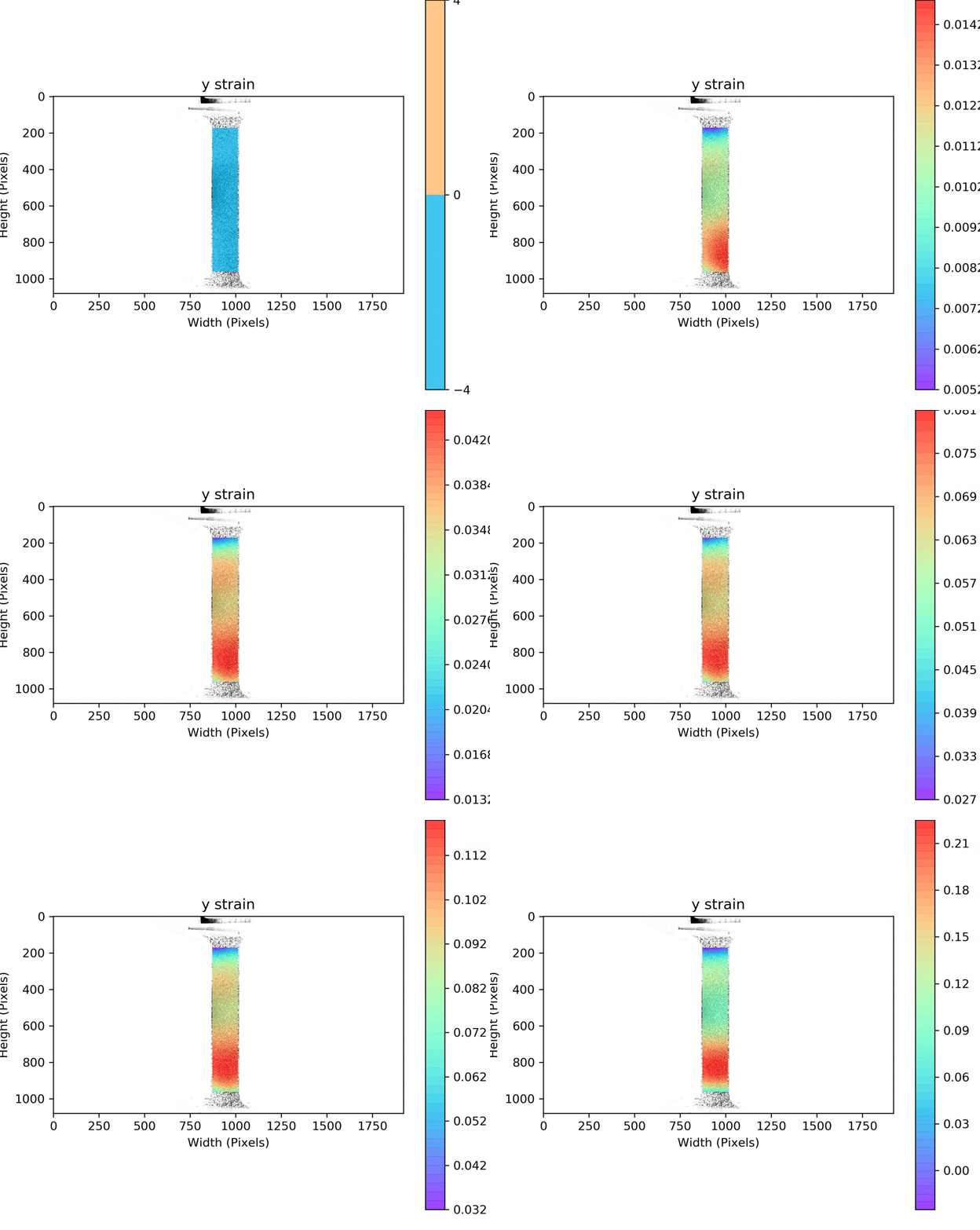
For quantitative in-plane deformation measurement of planar specimen surfaces, 2D Digital Image Correlation (DIC) is an indispensable tool in experimental mechanics. It provides full-field displacement to sub-pixel accuracy and full-field strain tensors by tracking speckle pattern transformations before and after load application.
We developed a Raspberry Pi and PiCamera based embedded DIC system capable of real-time local strain field calculation. Remarkably, the total hardware bill of materials is under $100, compared to commercial optical systems costing $30,000 to $40,000+. The underlying software is written entirely in Python, and is published under an open-source GPLv3 license for universal laboratory access.
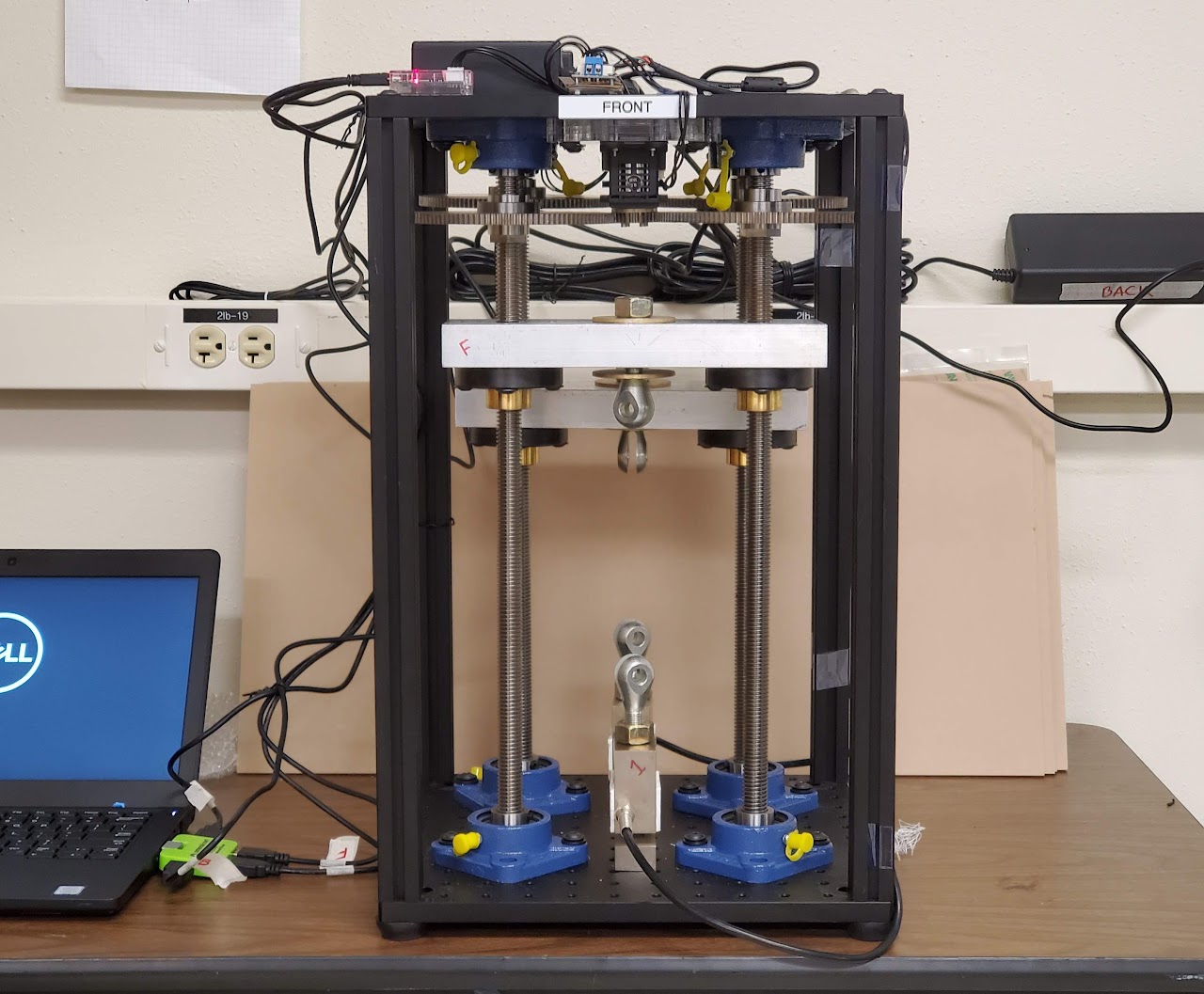
In-Situ Microtensile Testing Rig
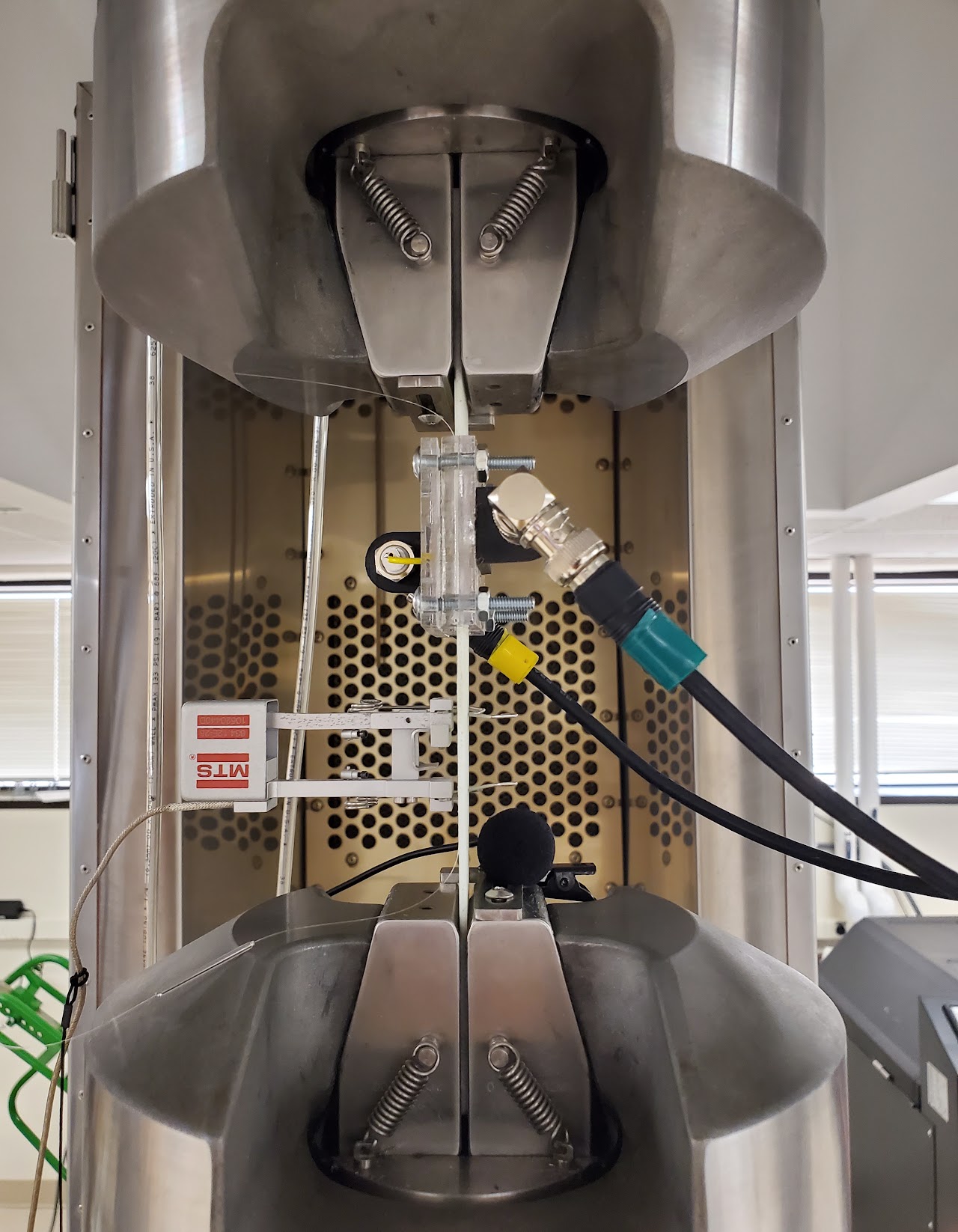
Our custom micro-universal testing machine enables high-precision uniaxial and cyclic loading of miniature fiber bundle and thin-laminate specimens with a load range of 1 - 5000N.
By combining the microtensile stage with synchronized RealPi2dDIC optical tracking and broadband dielectric spectroscopy, we capture real-time damage initiation and progression.
Multi-Mode Dynamic Fatigue Testing Machine & Acoustic Break Detection
Equipped for End loaded Bending Fatigue Testing and Torsion Testing of Composite Specimens.
The Audio-Feedback Failure Detection System: As composite fatigue runs can span hours to days, our acoustic sensor identifies the high-frequency fracture sound of composite failure, triggers immediate apparatus safety shutdown, captures a digital photograph of the fracture surface, and emails the test operator automatically.
Explore Related Works
Discover past initiatives and undergraduate engineering designs.